

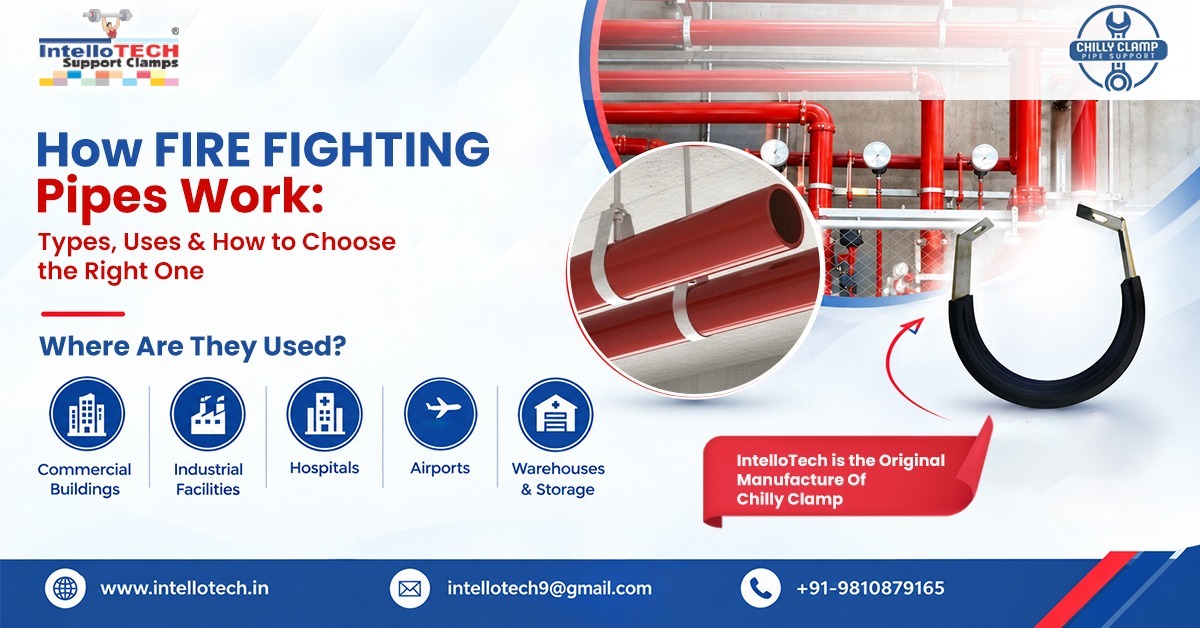
A Fire Fighting Pipes system is an important aspect of a building’s fire safety plan. It delivers water from a dependable water source to sprinklers, hydrants, hose reels and other fire fighting instruments. The right pipe system must be able to take pressure, maintain water flow at a steady pace, and meet the fire code standards that go along with it.
The choice of the correct firefighting pipes is relevant for numerous job types. That comprises shops and offices, factories and warehouses, commercial and domestic projects. And firms like Intellotech can help consumers achieve higher system reliability and safer results in the long term. They discuss task requirements, use case and installation conditions to find acceptable piping options.
How Do Fire Fighting Pipes Function
A firefighting pipe system is a network of pipes connected together. It connects the water supply to where the water is needed in an emergency. The line remains ready under typical day-to-day conditions. When a fire is detected or a sprinkler is activated water flows through the pipes and out of the fire outlets.
The average workflow looks like this:
- Water supply or storage: water stored in a permitted source, such a tank.
- Fire pumps: Pumps provide the appropriate pressure and flow of water.
- Pipe network: pipes which distribute the water over the region to be protected.
- Fire outlets : devices like hydrants , sprinklers and hose reels dispense the water .
- Valves and controls – These control flow, shut off sections and help control operation.
The pipe size, pressure rating, arrangement and material must meet the requirements of the whole fire protection system to complete the installation.
Types of Pipes Used in Firefighting & Their Specifications
Pipe material and layout change with the project. They also depend on the fire system plan.
1. Mild Steel Fire Pipes
Mild steel is common in fire setups. It is strong and easy to source. With the right spec and corrosion protection, it can especially work for hydrant lines, sprinkler networks, and other fixed systems.
2. Galvanized Iron or Galvanized Steel
The galvanized pipe has a zinc layer. That layer slows down rust. In some projects, owners and firms look at this option for fire protection runs. Intellotech is a leading Fire Fighting Pipes Manufacturer that is always considered for certain installations when the system design and rules allow it.
3. Stainless Steel Fire Pipes
Stainless steel resists corrosion well. It can also suit places that need long service life. It can also help where hygiene matters. However, it is important to review the project budget and assess the specific task requirements.
4. Grooved Pipe Systems
Grooved pipes use couplings and fittings made for grooved ends. This avoids normal welded joints. It can speed up work and make upkeep easier in some fire protection cases.
Where are These Fire Pipes Used?
Fire piping is needed in many building types, such as:
- Commercial buildings
- Factories and manufacturing sites
- Warehouses
- Hospitals
- Hotels
- Apartment or residential towers
- Shopping centers
- Schools and colleges
- Parking structures
- Industrial sites
- Data and utility zones
In short, The final choice comes from the building use, how high the fire risk is, the size, the floor plan, the water supply, and the fire safety rules that apply.
The Major Advantages of a Proper Firefighting Pipe System
1. First, it moves water in a steady way.
With the right pipe sizes, the flow reaches the fire points that are particularly needed.
2. Next, the system lasts longer.
Good material choice and the right pressure rating help the network handle daily stress.
3. It also supports stronger fire response.
When the layout is sound, it backs up sprinklers, hydrants, and other key devices.
4. Maintenance becomes less of a headache too.
If valves are easy to reach and the connections are particularly laid out in a clear order, checks and repairs are faster.
5. It can also grow later.
When the design leaves room for change, you can adjust the system in the future without starting over.
How to Pick the Best Firefighting Pipe Manufacturer
Do not choose only by cost. The pipe should fit the job needs in terms of hydraulics, the site conditions, and local rules. Hence, you can Use these points when you decide:
1. Use Case
Choose pipes according to the support they will provide to sprinklers, hydrants, hose reels or another system.
2. Working Pressure
Verify the test pressure and working pressure.
Then pick the pipe specs.
3. Material of the Pipes
Consider the corrosion risk, placement of the pipes, projected service life and any project restrictions.
4. Diameter of the Pipe
Big is better.
The diameter must match the desired water flow and pressure.
5. Connection Technique
Joints may be threaded, flanged or grooved, or welded.
The optimum solution relies on the system design.
6. Codes and Approvals
Always ensure that the items and the installation meet fire safety laws, standards and project specs.
7. Conditions for Site Installation
Indoor or outdoor use, above or below ground, exposed or covered locations and also in any corrosive environment.
8. Suppliers’ Reliability
Choose a supplier who can offer consistent product quality, technical knowledge, documentation and after-sales support in particular.
Why Choose Intellotech for Fire Fighting Pipe Works?
A fire protection system is not only about the pipe itself. Buyers also need the right specs, steady stock, and real help when questions arise. Intellotech is known as the trusted Fire Fighting Pipes Supplier often used by project owners, contractors, consultants, and industrial buyers. The goal of our company is simple: match the product to the job and provide support that fits the site and the system plan. Teams can review what they need by looking at the design, site limits, and what the system must achieve.
Moreover, this approach matters in many places. A commercial building, an industrial plant, a warehouse, or other support projects all rely on early choices. In short, Picking a suitable piping option at the planning stage can lead to a more stable fire protection setup.
Conclusion
Firefighting pipelines Provide water to hydrants, sprinklers, hose reels and other fire devices. Best choice relies on pipe material, pipe size, needed pressure, method of connection, install environment and applicable restrictions. And it isn’t just expense that must be balanced in the beginning. Project owners should also consider wear life, fit with other parts, paperwork and supplier dependability. However, with the correct product match and solid system design, Intellotech is renowned as Best Fire Fighting Pipes Manufacturer since it always assists teams that seek firefighting pipe that suits their needs.
FAQ
Q1. What is a fire fighting pipe?
These carry water from the water supply to sprinklers, hydrants, hose reels and other fire-safety equipment.
Q2. What are several sorts of fire fighting pipes?
The most popular alternatives are mild steel, galvanized steel, stainless steel and grooved pipe systems.
Q3. Where are pipes used for fire fighting?
They are in industries, warehouses, hospitals, hotels, office buildings, residential complexes and other sorts of properties.
Q4 . How to choose the suitable fire fighting pipes ?
Begin with the type of work, the pressure needed, the pipe size, the material, the method of connecting the pieces, the site conditions and the rules in force.
Q5. Why are fire safety and pipe quality important?
Good piping will deliver water at the correct flow and pressure to make the overall fire protection system work correctly.
Q6. Why choose Intellotech for firefighting pipes?
Intellotech can assist customers in choosing the appropriate pipe alternatives considering the project needs, the use case and the system characteristics.
Contact Details
Company Name: Intellotech
Phone: +91-9810879165
Mail Us: intellotech9@gmail.com
Address: A-87/6, Wazirpur Industrial Area New Delhi – 110052